Local News
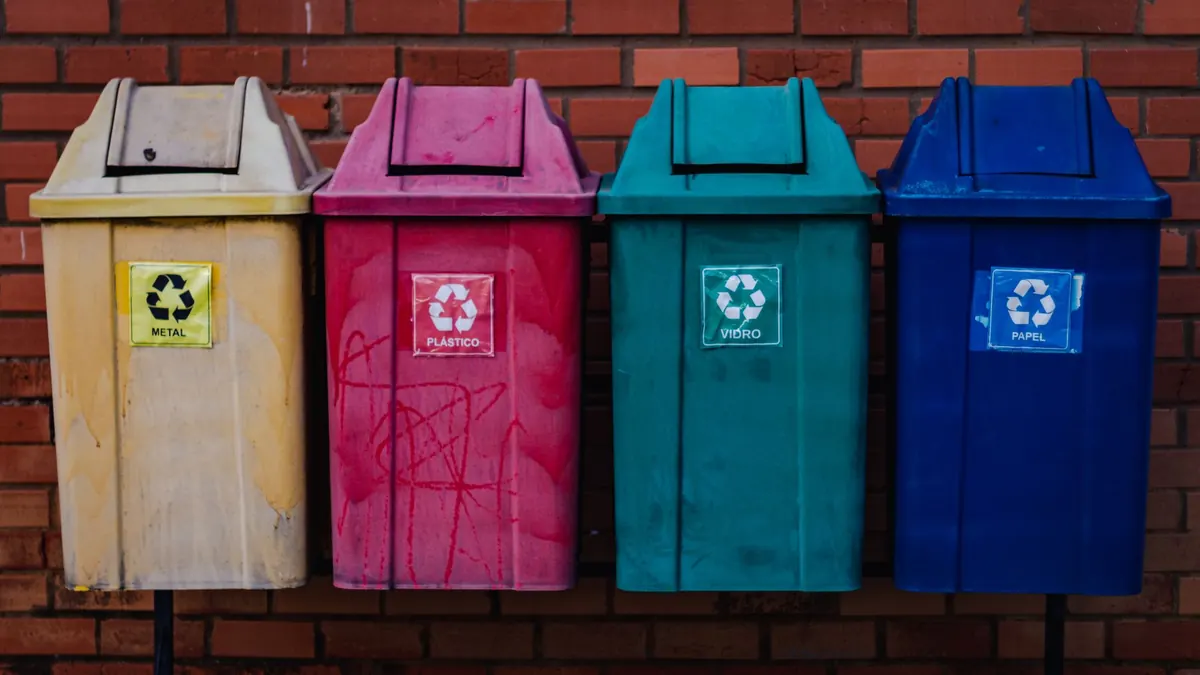
Curbside vs. Drop-Off Recycling in Rowan: Which Option Actually Fits Your Household?
On a Tuesday morning in Rowan, two households solve the same problem in completely different ways. One rolls a cart to the curb before seven and forgets about it. The other spends part of a Saturday loading flattened boxes into a trunk and driving to a convenience site on the edge of town. Neither approach is wrong. But the two systems accept different materials, cost different amounts, and suit different homes — and plenty of residents pay for curbside service while still making regular drop-off runs for the things curbside won't take.
So which one actually fits your house? It depends less on willpower than on three unglamorous factors: what you generate, where you store it, and what you're already paying for.
What Curbside Actually Takes
Most curbside programs in the Rowan area run on single-stream collection: paper, cardboard, cans, and containers all go into one bin and get sorted later at a facility. That convenience comes with a hard ceiling on what the system can handle.
Generally accepted at the curb: mail and office paper, newspaper and magazines, flattened corrugated cardboard, aluminum and steel cans, glass bottles and jars where the program accepts glass, and plastic bottles and jugs. Generally not accepted: plastic bags and film, foam packaging, shredded paper, garden hoses and cords, batteries, electronics, yard waste, scrap metal, and bulky items.
The rejections aren't arbitrary. Plastic bags wrap around sorting equipment. Shredded paper falls through screens and ends up in the wrong stream. Tanglers like hoses and string lights shut down machinery and force crews to stop the line and cut them out. When you put those items in the bin hoping for the best, you don't just risk your own recyclables — you slow down everything behind them.
Where Drop-Off Sites Pull Ahead
Convenience sites and transfer stations exist mainly because curbside can't do everything. They typically accept, in separate containers, the materials your bin never will:
- Scrap metal, appliances, and other bulky metal items
- Yard waste, brush, and limbs
- Electronics, batteries, and used motor oil
- Tires, and in some locations textiles or shoes
- Large volumes of cardboard from a move or a clean-out
Because the containers are separated by material, drop-off often produces a cleaner recycling stream than a mixed curbside bin. That's a real advantage if you care about whether your material actually gets recycled rather than sorted out and landfilled.
The trade-off is obvious: you're the collection truck. If you have a garage clean-out, a dead water heater, or four broken-down boxes from a furniture delivery, a single Saturday run beats waiting weeks and hoping the hauler takes it.
The Money Question
Curbside service is usually either bundled into your trash bill or sold as an add-on. If you're already paying for it, skipping the bin saves you nothing — you're just subsidizing a service you don't use. The better question is whether your hauler offers a smaller trash cart with recycling included. Households that recycle consistently often find they can size down their garbage and cut the bill.
Drop-off is typically free to county residents, funded through taxes or a solid-waste fee rather than a per-stop charge. But free isn't the same as costless. A twenty-minute round trip twice a month is about an hour of your time, plus fuel. Compare that honestly against what curbside costs you per month and decide which currency you'd rather spend.
Fees, contracts, and accepted-materials lists change. Before you cancel or add a service, confirm the current details with your hauler or the county solid waste office and get the accepted list in writing — not from a neighbor's memory of last year's rules.
Schedules, Storage, and Who Lives in the House
Curbside runs on someone else's calendar: weekly, every other week, or monthly depending on the hauler. That means remembering collection day, setting the cart out the night before, and hauling it back in. Drop-off runs on yours — you choose the day and time, though site hours are limited and Saturday mornings tend to be the busiest.
If you live in an apartment
Check your lease and your property manager first. Some complexes provide shared recycling containers; others don't, and curbside carts aren't practical for a third-floor unit. If your building has no program, drop-off is the realistic option — and a small lidded bin in a closet or on a balcony keeps it manageable between trips.
If you have a family with kids
Volume is the deciding factor. A household producing two or three bags of containers and cardboard a week will fill a curbside cart fast, and curbside is far easier to keep up with when the schedule is fixed. Add a monthly drop-off run for the overflow and the bulky stuff.
If you live outside town or on a rural road
Some rural addresses don't have curbside service at all, or the hauler charges a long-drive surcharge. If that's you, drop-off is often the default — and worth stacking into one efficient trip. Save containers in sturdy bins, flatten every box, and go when you have enough to justify the drive rather than making three half-empty runs.
A Quick Test Before You Switch
- Find out what you're already paying for recycling, and whether a smaller trash cart would lower your bill.
- Read your hauler's accepted-materials list and compare it with the county site's list.
- Track your volume for two weeks. One small bin, or five?
- Try drop-off for a month before canceling curbside. Some people love it; some people leave a trunk full of cans sitting there until spring.
- Check the site's hours against your actual schedule, not your ideal one.
The Practical Bottom Line
Most Rowan households end up using both. Curbside handles the steady weekly stream — cans, bottles, paper, cardboard — with the least effort. Drop-off handles the rest: the metal, the yard waste, the electronics, the moving-box avalanche that no bin was built for.
Start with what you're already paying for, be honest about how much you generate, and pick the option you'll actually keep up with in February when it's cold and the bin is full. A slightly imperfect system you maintain beats a perfect one you abandon.
Photo: Hiago Rocha / Pexels
Related Articles