Sports
Friday Night Lights for Beginners: How to Follow Rowan High School Football This Season
Friday nights in Rowan have their own rhythm. The parking lot fills well before kickoff, the marching band warms up behind the home bleachers, and the concession line stretches past the booster tent by halftime. If you have never been to a Rowan High School football game — or you moved here over the summer and still cannot name the rival — this is the year to start. You do not need to understand every penalty to enjoy it. You need to know where to sit, what to bring, and which games matter.
Here is the good news: high school football is the most welcoming version of the sport. Nobody checks credentials at the gate. There is no wrong question to ask the person beside you. And unlike the games you watch on television, everything happening on the field is happening to kids who live a few streets away.
Start With the Schedule — and the Conference
High school football runs on conferences, sometimes called leagues or regions depending on the state. Schools are grouped by enrollment and geography, which is why Rowan lines up against some towns you know and a few you do not. Teams typically play non-conference games early and conference games later, and the conference ones carry the most weight.
Find the conference first, then read the schedule through that lens. If Rowan sits in a six-team conference, those five conference games decide the standings, the all-conference honors, and usually the playoff seeding. The other games are tune-ups, measuring sticks, and sometimes pleasant surprises.
The season follows a predictable arc: practice begins in August, the first games land in late August or early September, the regular season ends in late October, and the playoffs run through November. Your state may shift a week or two, but the shape holds.
Schedules live on the district athletics page, in the school office, and on the program's social accounts. Freshman and junior varsity teams usually play earlier in the week or on Saturday mornings, which makes those games a low-pressure first outing, especially with young kids. A JV game in September is the cheapest, quietest way to learn the field, the parking, and the names before a packed Friday crowd shows up.
Tickets, Parking, and What to Bring
Gate prices are modest compared with college or professional sports, and students and seniors usually pay less than adults. Some districts sell season passes through the athletic office or booster club, and a family pass can pay for itself after a few games. Ask the school for current prices rather than trusting last year's number; they change, and they vary from school to school.
Many gates still run on cash, and the concession stand almost certainly does. If cost is a barrier, call the athletic department and ask. Schools often have options they do not advertise.
Parking deserves its own note. Arrive thirty to forty minutes early for a conference game and closer to an hour for a rivalry or homecoming night. Follow the volunteers waving you toward the grass lot, never park in the bus loop or the fire lane, and remember where you parked — every school lot looks identical after dark.
A short packing list helps:
- Cash for the gate and the concession stand
- A blanket or stadium cushion — aluminum bleachers get cold fast in October
- Layers and a rain jacket, even if the forecast looks fine
- Ear protection for young kids or anyone sensitive to noise
- A battery pack or charger — you will take more photos than you expect
- Bug spray for the first few weeks of the season
Where to Sit — and When to Stand
Home bleachers sit behind the team's sideline; visitors get the other side. Sit anywhere on the home side and you will be surrounded by people who know the program, which is invaluable when you are still learning names and numbers. The student section typically occupies one block of bleachers near the band. It is loud, choreographed, and often more entertaining than the scoreboard.
If you have a toddler, a grandparent, or anyone who flinches at sudden noise, sit at the far end of the home bleachers, away from the band and the students. You will still see everything, and you will still hear the cannon, the drums, and the roar — just at a comfortable distance.
Etiquette is simple. Stand for the national anthem and when the band plays the school song. Stand, or at least do not complain, on third down when the defense is on the field. Otherwise, sit back, cheer when the crowd cheers, and let the evening carry you.
How to Follow the Game If You Don't Know the Rules
You can learn the sport in one quarter with a handful of ideas. The offense gets four downs — four plays — to gain ten yards. Make ten yards and the count resets to first down. Fail, and the other team takes over. That is the entire engine of the game.
Scoring is equally tidy. A touchdown is six points, the extra-point kick is one, and a two-point conversion run or pass is worth two. A field goal is three. A safety, when the defense tackles the ball carrier in his own end zone, is two and rare enough to be exciting. Penalties are mostly holding, offside, and pass interference, and the referee will announce them over the loudspeaker — you do not need to spot them yourself.
When in doubt, watch the crowd. A roar on offense means the ball moved forward. A roar on defense means somebody got tackled behind the line. The reaction tells you more than the referee's hand signals.
The Games That Matter Most
Not every Friday carries the same weight. Circle these on the calendar:
- The conference opener. Sets the tone for the standings and draws a full, invested crowd.
- Homecoming. Usually mid-October, with alumni tents, a halftime ceremony, and the biggest attendance of the year. Come early or expect to walk.
- Senior night. The final home game, when the seniors walk out with their families. It is the most emotional hour of the season, and worth seeing even if the game is a mismatch.
- The rivalry game. Often the last week of the regular season. This is the one with a trophy, a history, and a ticket line. Ask anyone in town which game it is — they will know instantly.
- Playoff games. November football, sometimes at a neutral site, always colder than you planned for.
“You can show up knowing nothing and leave knowing the whole roster,” one longtime booster likes to say. “That is what Friday nights are for.”
Keeping Up Between Fridays
You do not have to wait a week to find out how the team did. The district athletics page posts schedules, scores, and standings. The program's social accounts post final scores within minutes and highlight clips the next morning. The booster club newsletter often carries rosters, injury notes, and details about the next game's theme nights.
Some districts stream games online through a subscription service or a school-run channel, which helps if you cannot make the trip. Local radio and the community paper still cover Rowan football too, and a Tuesday night coach's show — if your program has one — is the fastest way to understand why the team does what it does.
Getting Involved — the Fastest Way to Belong
Nothing accelerates your education like volunteering. The booster club needs people to work the concession stand, sell fifty-fifty raffle tickets, run the chain gang on the sideline, and staff the spirit table. Band parents need help moving equipment. The athletic department needs help at the gate.
Two hours behind a concession counter will teach you more about Rowan football than a season of watching from the bleachers. You will learn the coaches' names, the seniors' numbers, and which parents bring the good snacks. If you would rather just cheer, that is fine too — buy something at the concession stand, and you have already helped.
Final Tips for Your First Friday
- Pick a non-conference game in early September for your first visit. Smaller crowd, easier parking, forgiving atmosphere.
- Arrive early, walk the whole stadium once, and figure out where the bathrooms and exits are before it gets dark.
- Bring more layers than you think you need, and a blanket for your knees.
- Ask a neighbor in the bleachers to explain what just happened. They will be delighted.
- Stay to the end. The final minutes of a close high school game are the best theater in town.
Then go again. By October, you will know the fight song, you will know which sideline to watch, and you will understand why the parking lot fills so early on a Friday in Rowan. You will have become one of the people who never misses a home game.
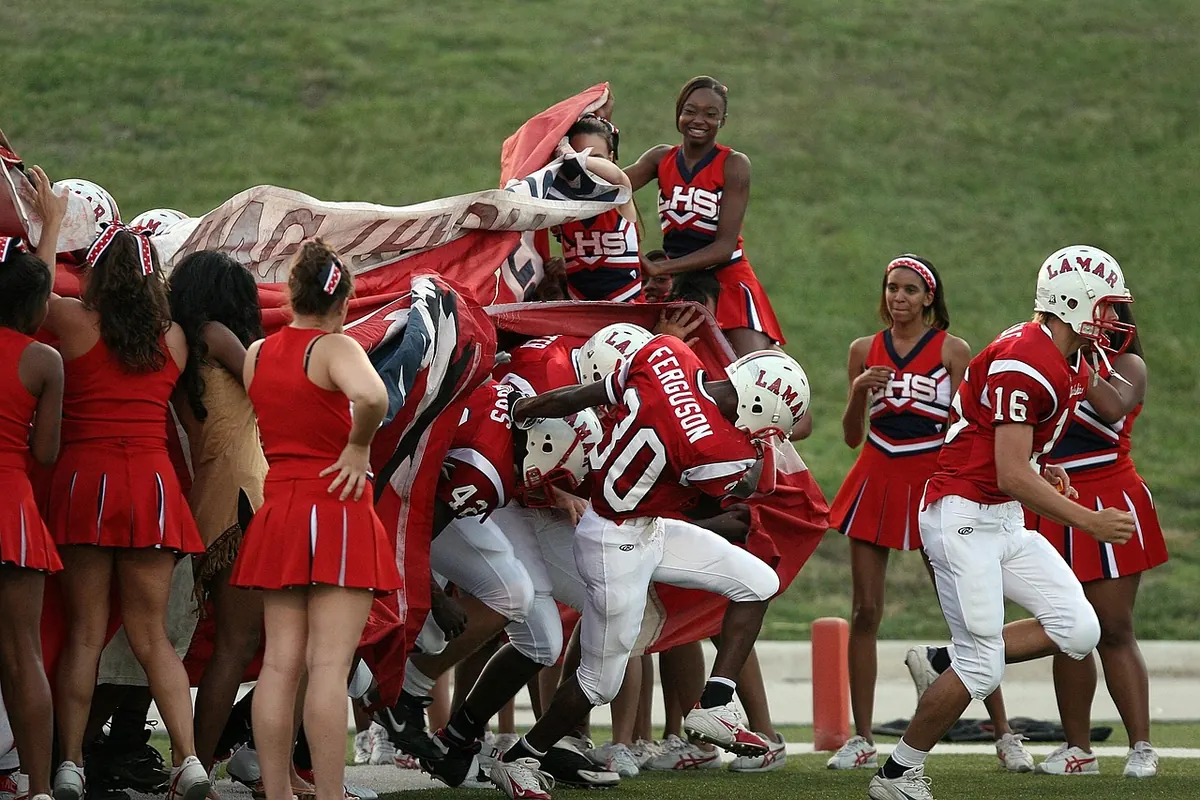
Photo: KeithJJ / Pixabay
Related Articles